


TLDR: Nobody ever ran through a wall for “we.” They ran through it for a person who said, “I see you. And I’m grateful you’re here.” It’s easier for leaders to hide behind “we” because it’s safe. But safe doesn’t build trust, personal does. You don’t earn the right to “we” until you’ve established “I.”
On a dreary fall morning in midtown Manhattan, I sat across from Sharran Srivatsaa at a corner table, eggs getting cold, and he said something to me that rewired how I think about leadership.
“I want you to build your brand, build your authority. Because when this company grows, I want you to grow with it.”
Not “we want you to succeed.”
I want you to build your brand.
First person singular with his name on it and his belief… not the company’s belief… directed at me specifically.
At the time, I didn’t fully understand why that sentence hit so different, I just knew it did.
It took years of leading people myself and watching how trust actually works in organizations before I could name it.
What Sharran did in that moment was swap one word, and that one word changed everything.
He said “I” when everyone else would’ve said “we.”
Here’s what I’ve learned about “we.”
“We” sounds inclusive.
It sounds like a team.
It sounds like the kind of word you’d find on a motivational poster in a WeWork lobby, right next to a stock photo of people high-fiving. (see what I did there)
But “we” is also the greatest hiding spot in corporate America.
Because when a leader says “we’re grateful”... nobody said they’re grateful. When a leader says “we believe in you”... nobody actually said they believe in you.
It’s the equivalent of signing a birthday card that someone else bought. You didn’t pick the card or write the message, but your name’s on it, so... technically you care.
I’ve been on both sides of this.
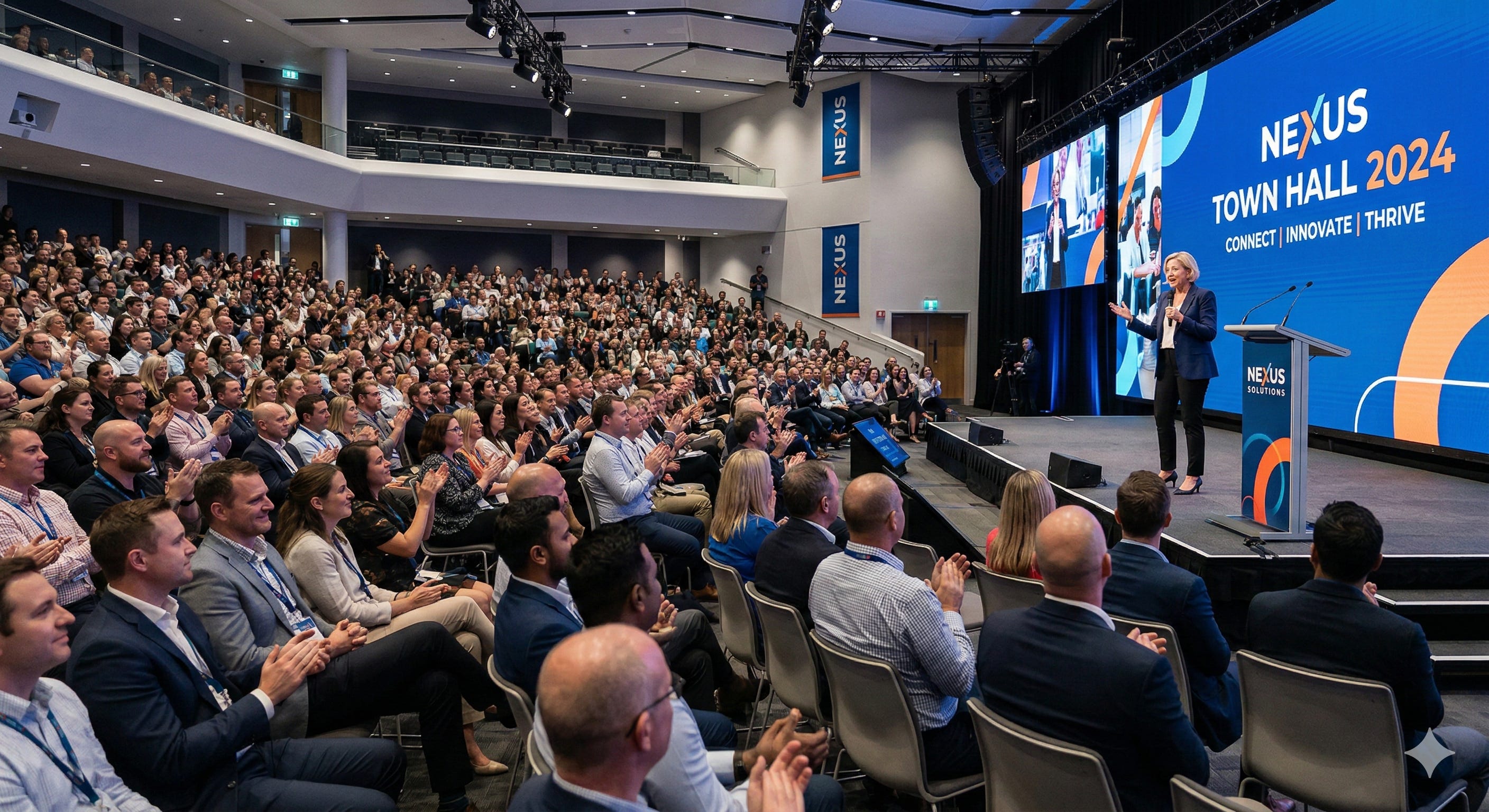
I’ve been the person in the audience hearing “we” and wondering who, exactly, was talking. And I’ve been the leader standing in front of thousands, deciding whether I was going to speak as The Company or as me.
That choice matters more than most leaders realize.
Now look, I’m not anti-”we.” I think “we” has a place.
“We” is real when a team wins together.
“We” is real when people build something side by side and want to share the credit. (I’m not anti-team.)
But here’s where it breaks down.
In certain industries you’ve got companies with thousands… sometimes tens of thousands of independent contractors out in the field doing the actual work.
Selling, prospecting and sitting across from someone at their kitchen table helping them make the biggest financial decision of their life.
And when those people hear “we care about you” from a stage or a screen, what they’re really asking is:
“But do you care about me? You, the person saying this… do you actually know what my Tuesday looks like?”
The gap between “we care” and “I care” is the gap between a press release and a relationship.
That’s the whole thing.
People don’t trust companies. They never have, and honestly… they shouldn’t.
A publicly traded company has one legal obligation: improve shareholder value.
That’s not cynicism, that’s literally a quarterly earnings call. Margin expansion, not emotional expansion, is the business model… and that’s fine because that’s how it works.
But when the humans inside those companies speak exclusively in the corporate plural, something breaks.
The trust mechanism that actually connects people… one human saying to another human, “I see you, I’m glad you’re here”… gets replaced by a logo saying it on their behalf.
And logos don’t build trust. Humans do.
I call this The Pronoun Problem.
It works like this:
“We” is a shield. It protects you. “We” is diffused responsibility wearing a company polo.
“I” is a bridge. It connects you. When a leader says “I’m grateful you’re here,” they just put their name on something. They just made it personal, and personal is the only currency that actually builds trust.
That’s what Sharran did for me over cold eggs in midtown.
He didn’t hide behind the brand. He put his own name on his belief in me. And that single act of personal leadership changed how I thought about every interaction I’ve had with a team since.
When I started leading, I made a decision: I would be the kind of leader who says “I” first.
Not because “we” doesn’t matter, but because “we” means nothing until “I” has been established.
The companies most afraid of their people building personal brands are the ones who need it most.
Because in a world where nobody trusts logos, your biggest competitive advantage is having humans inside your organization who are known, respected, and trusted in their own right.
You’re not building competitors, you’re building ambassadors.
But that requires a kind of leadership confidence that’s rare.
It requires saying, “I trust you enough to let you be known. I’m secure enough to not need the spotlight. And I believe that when you win, we all win.”
See what happened there? The “I” came first. And then the “we” actually meant something.
That’s The Pronoun Principle.
You don’t earn the right to “we” until you’ve established “I.”
“I” first. Then “we.”
Because “we” without “I” is just a press release. “I” followed by “we” is a relationship.
So here’s my challenge for you.
Whether you’re a CEO, team lead, a broker, a coach, a manager, a founder… whatever chair you’re sitting in right now.
This week, find one moment where you’d normally default to “we.”
“We appreciate your hard work.”
“We’re excited about the future.”
“We believe in this team.”
And replace it with “I.”
“I appreciate what you did on that deal.”
“I’m excited about where you’re headed.”
“I believe in you.”
Watch what happens.
Watch their face change.
Watch the trust shift from corporate politeness to something that actually means something.
Because nobody ever ran through a wall for “we.”
They ran through it for someone who said, “I see you. And I’m grateful you’re here.”
That sentence Sharran said to me over breakfast? I didn’t frame it on a wall. But I built my career on it.