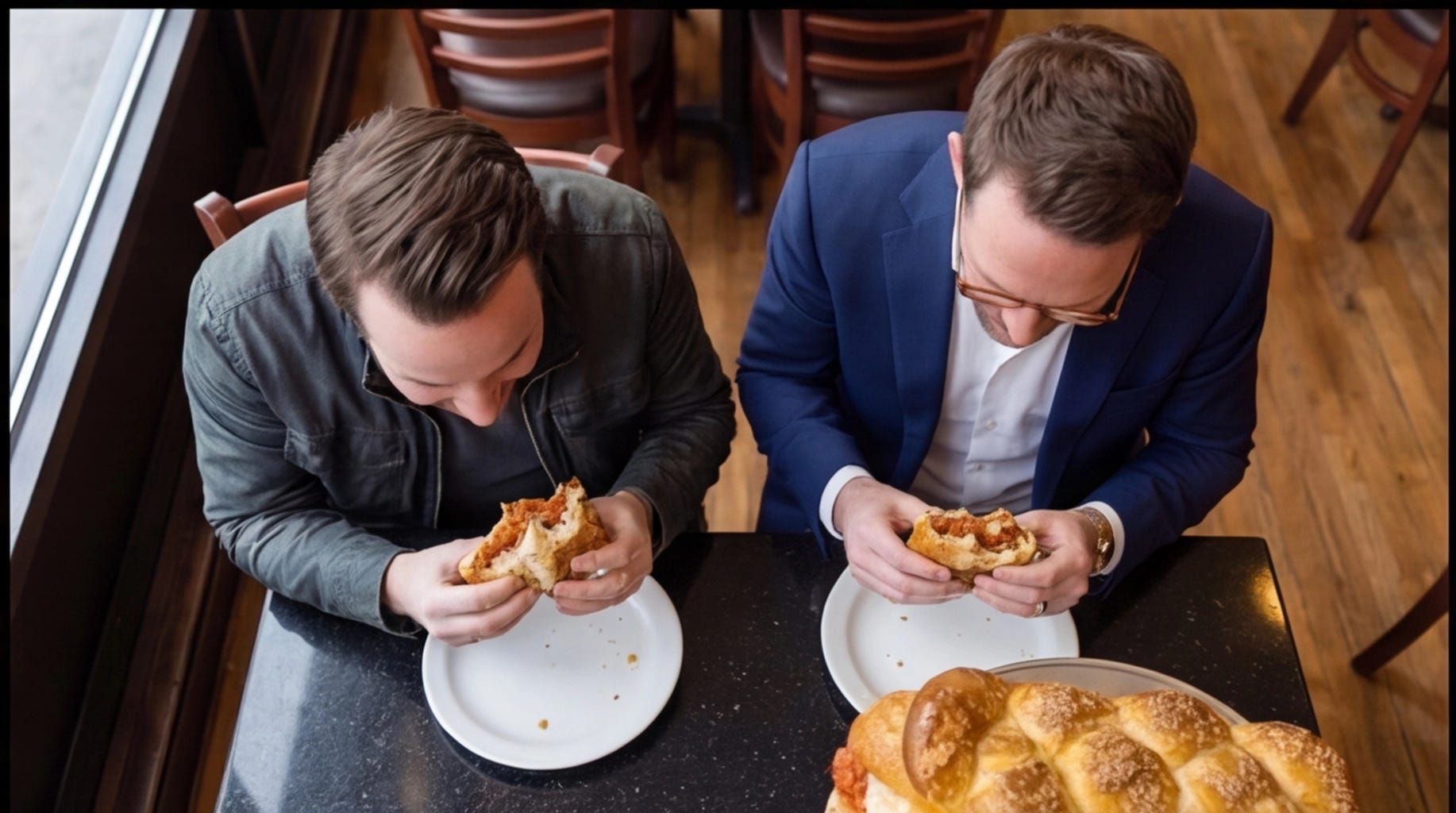

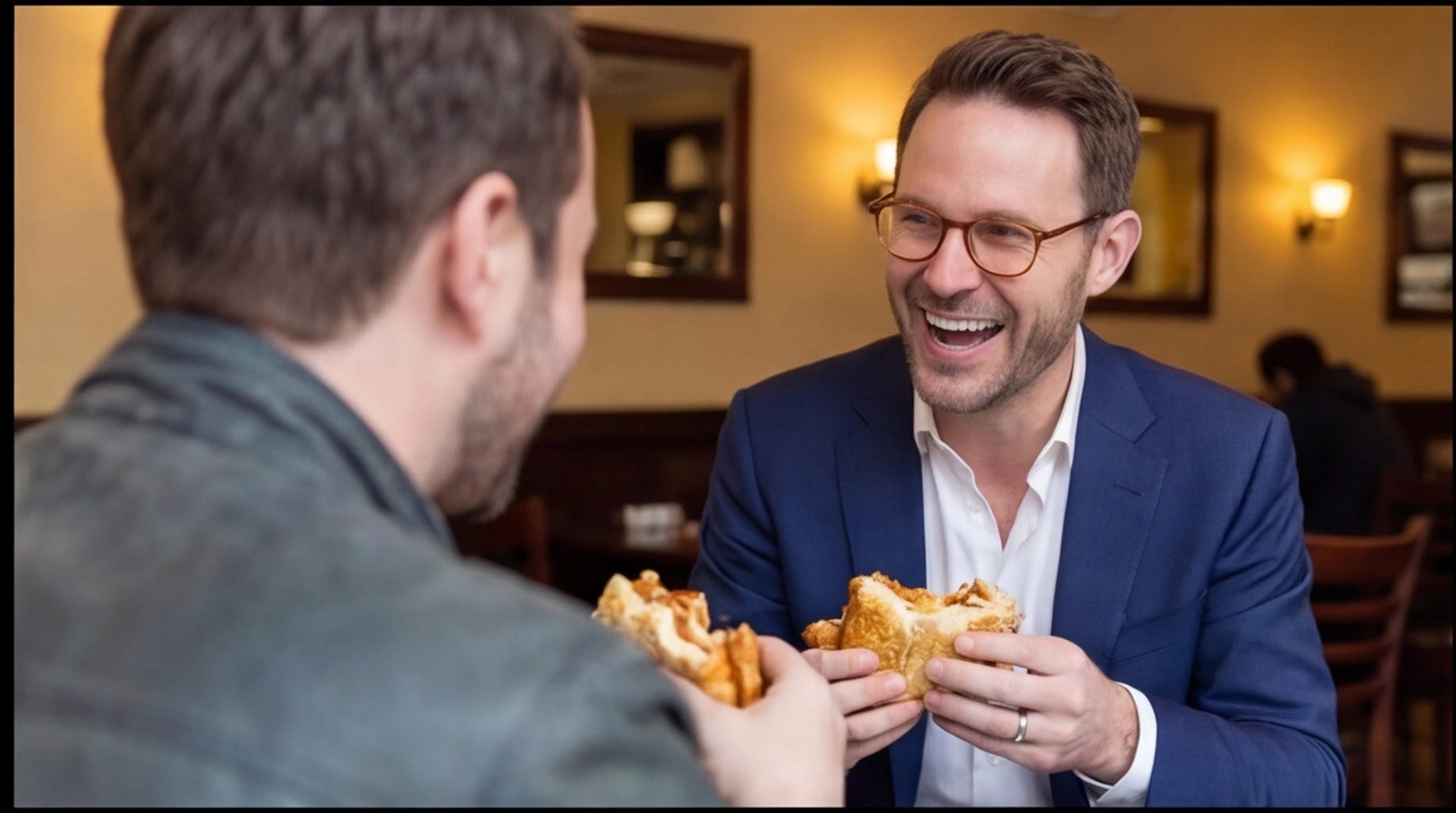
I was sitting across from my buddy at lunch today when he hit me with the kind of question that ruins a perfectly good sandwich.
“Do you think we’ll always need humans?”
I looked down at what I was holding.
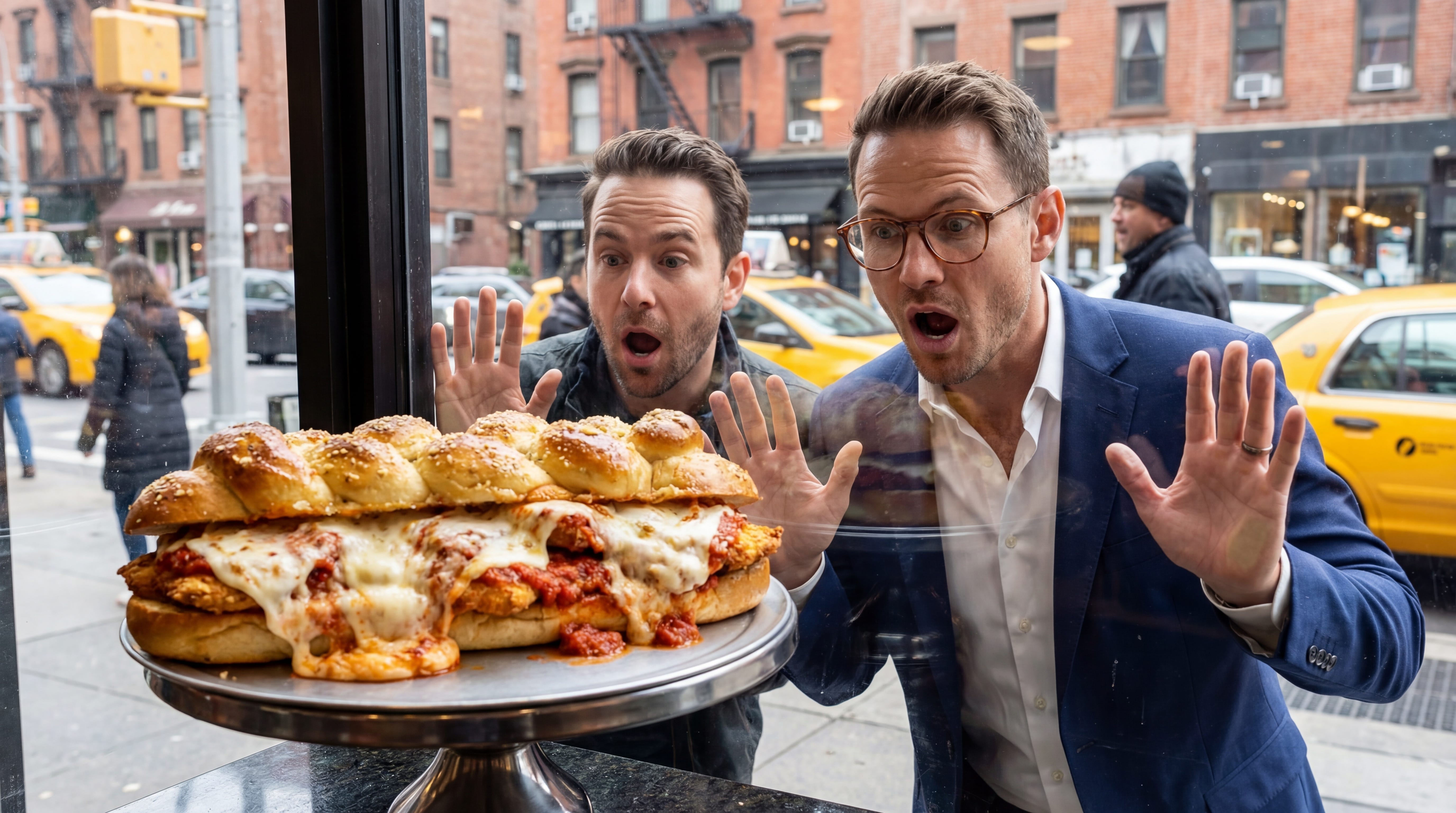
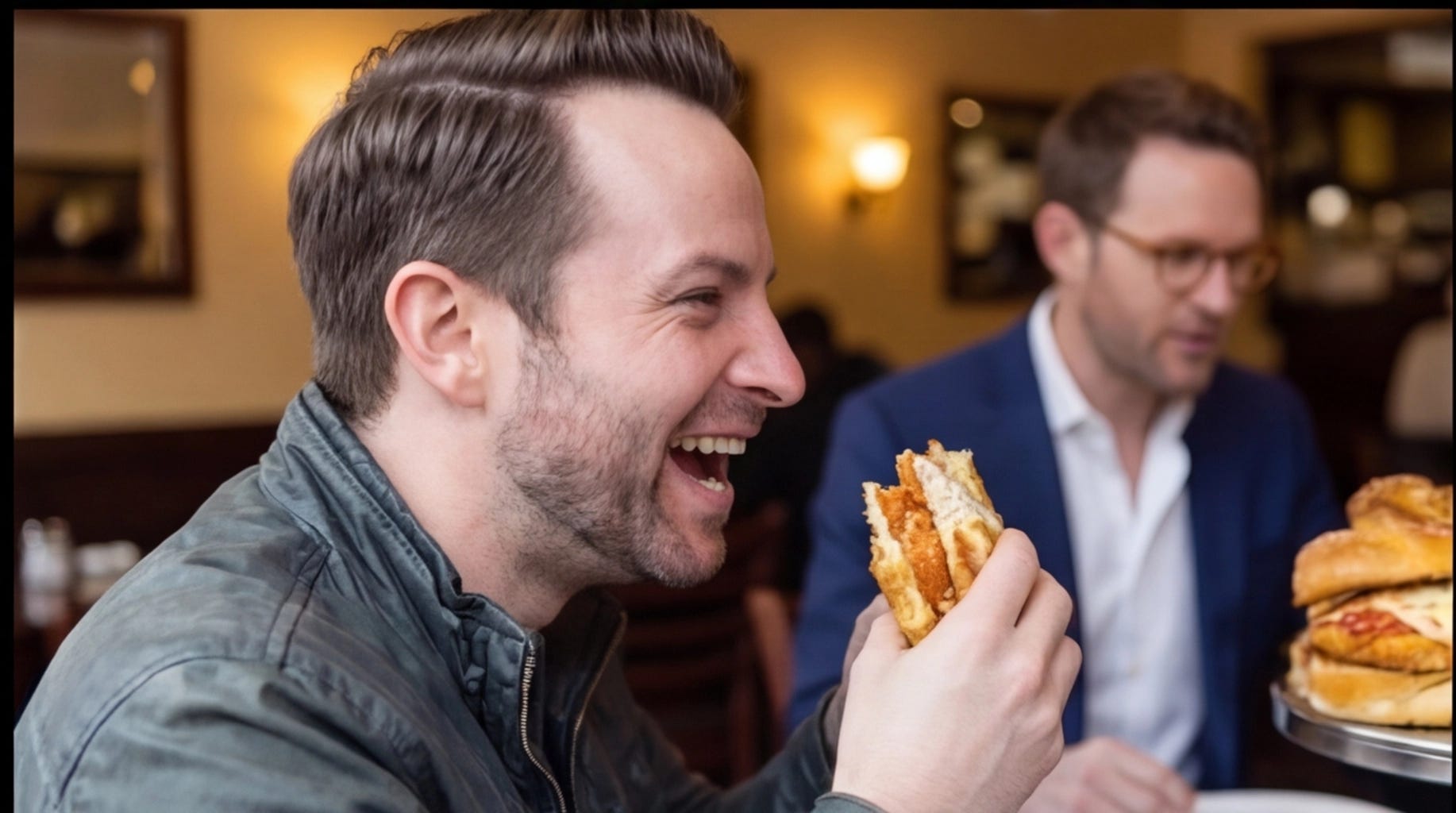
A garlic knot, split open like a roll, layered with melted mozz, marinara and a breaded chicken cutlet.
This “dad bod diet enabling” masterpiece was called “The Knot Chicken Parm” sandwich.
It was beautiful.
And it was the answer to his question.
Here’s what I know for certain: no algorithm invented that sandwich.
No machine learning model analyzed the complete history of Italian-American cuisine and concluded that the optimal delivery vehicle for chicken parmigiana was a garlic knot.
That idea came from a human brain, probably at 2 a.m., probably after 2 gummies, probably from someone who looked at two things that didn’t belong together and thought, what if?
That’s the part we skip over when we talk about AI replacing people.
We jump straight to automation, efficiency, and cost savings.
We talk about what AI can do , we almost never talk about what it can’t.
It can’t walk into a kitchen with a weird idea.
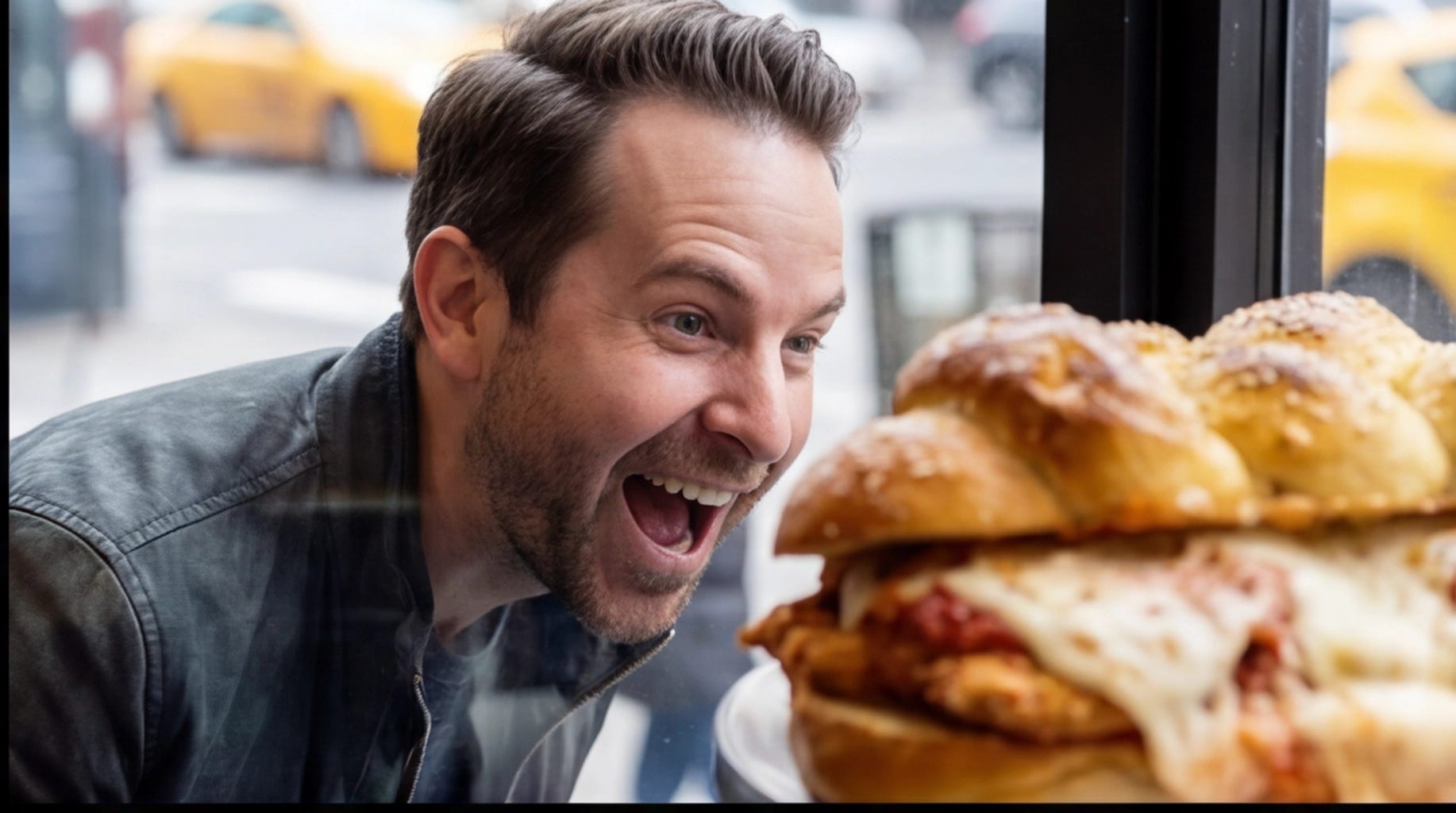
My buddy leaned back and said something that stuck with me.
“New capitalism,” he called it…or what Claude said could also be referred to as “Creative capitalism.”
The idea that the next wave of value creation isn’t going to come from optimizing what already exists. It’s going to come from imagining what doesn’t exist yet… and then using AI to figure out if it’s viable.
Think about that garlic knot chicken parm for a second.
The idea is pure human creativity. It’s beautiful and irrational..a just a little bit calorically reckless
But now imagine you hand that idea to AI alongside your restaurant’s profit and loss statement.
Suddenly the conversation changes.
AI looks at your ingredient costs and says:
Your garlic knot dough costs you 14 cents per unit. Your standard sub roll costs you 11 cents.
But your average ticket on specialty sandwiches is $3.80 higher.
The margin on this sandwich is better than 70% of your current menu.
Or it says: You’re already buying mozzarella and marinara in bulk for your pizza line. This sandwich uses existing inventory with zero new vendor relationships. Your food cost on this item is 22%.
Or, and this is the one that changes everything, it says: What if you did a garlic knot burger, with melted gruyère cheese, Peter Lugar smoked bacon, and guac? A garlic knot breakfast sandwich, with farm fresh organic eggs, an eggo, and covered in maple syrup? What if the knot becomes the platform? (I think this Knot could be a real idea for a restaurant in the city)
That’s knot AI replacing the human…that’s AI joining the human in the kitchen.
Side note: I’m getting hungry just writing this.
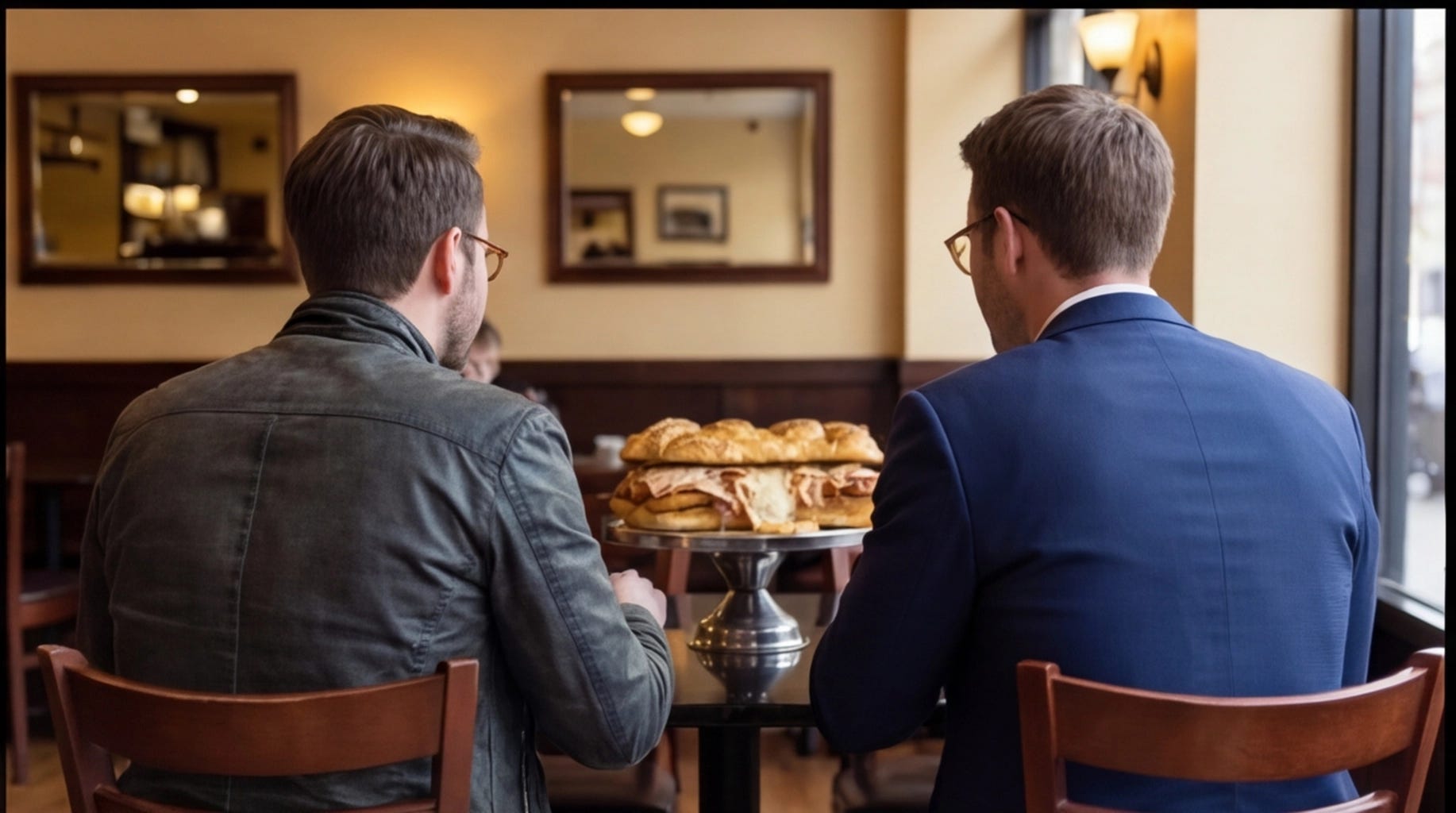
Here’s what I call The Garlic Knot Theory.
A framework, and it’s simple enough to fit on a napkin,which feels right, given how it started.
The human brings the “what if.”
AI brings the “here’s how.”
That’s it.
That’s the theory….very anti climatic.
The most valuable skill in the next economy isn’t prompting or automation.
It’s not knowing which model to use or how to build a workflow.
Those things matter, but they’re table stakes.
The skill that will separate people is the willingness to connect two dots that don’t obviously go together and then ask, what if?
What if we put chicken parm in a garlic knot?
What if we combined our two lowest-performing services into one premium offering? What if we used our returns data to design a product that doesn’t exist yet?
What if we took the thing we’re best at and delivered it in a way nobody’s tried?
Those are human questions, and they always will be.
But here’s what’s changed: before AI, asking “what if” was expensive.
You had to build the thing to find out if it worked.
That means you had to run the pilot, hire the team, burn the budget, etc.
Most people never asked “what if” not because they lacked creativity, but because the cost of exploring a bad idea was too high.
AI just made curiosity free.
You can model it.
Pressure-test it. Run the numbers six different ways before you spend a dollar.
The cost of a bad idea just dropped to zero….which means the value of a good one just went through the roof.
And the execution of that idea just became the most invaluable skill in the world.
I talk to business owners and executives every day who are trying to figure out where AI fits.
They want the playbook..or the magic AI stack.he
The “just tell me what tools to use to reengineer my workforce” answer.
That’s the comfortable question.
But the uncomfortable truth is this: the tools are going to keep changing.
The models will get better and the platforms will merge and split and rebrand. (we see this almost every other day)
If your entire AI strategy is built on a specific tool, you’re building on sand.
The thing that won’t change?
The person who sits across from someone at lunch, takes a bite of something ridiculous, and says, “Wait, what if we did this with everything?”
That’s the moat. That’s the thing AI can’t replicate and can’t replace.
Not the person who knows the most about AI.
The person who brings the most to AI.
Read that twice.
The Question You’re Not Asking
We will always need humans my buddy was right about that.
But we won’t need humans who do what machines can do faster.
We’ll need humans who do what machines can’t do at all.
Dream something unreasonable, connect things that don’t connect and then walk into the room with the weird idea and the confidence to say it out loud.
And then, this is the part most people miss, hand it to AI and say, make this real.
So here’s my question for you, and I mean this literally, not as some inspirational sign-off you scroll past.
What’s your garlic knot?
What’s the idea you’ve been sitting on, the combination nobody’s tried, the offer nobody’s made, the product that doesn’t exist yet, because it felt too weird or too risky to say out loud?
Say it out loud.
Then open a chat window and type: Here’s a crazy idea..tell me if the math works.
You might be surprised what comes back.